 17 Apr 2026
Collagen, widely used in food, medicine, cosmetics, and other fields, is already familiar to the public. However, when tissues are damaged by disease or trauma, it remains a major challenge in biomaterials to precisely replicate the complex structure and function of natural collagen using artificial materials. This challenge is central to the work of Professor Xue Qu’s team at the School of Materials Science and Engineering, ECUST.
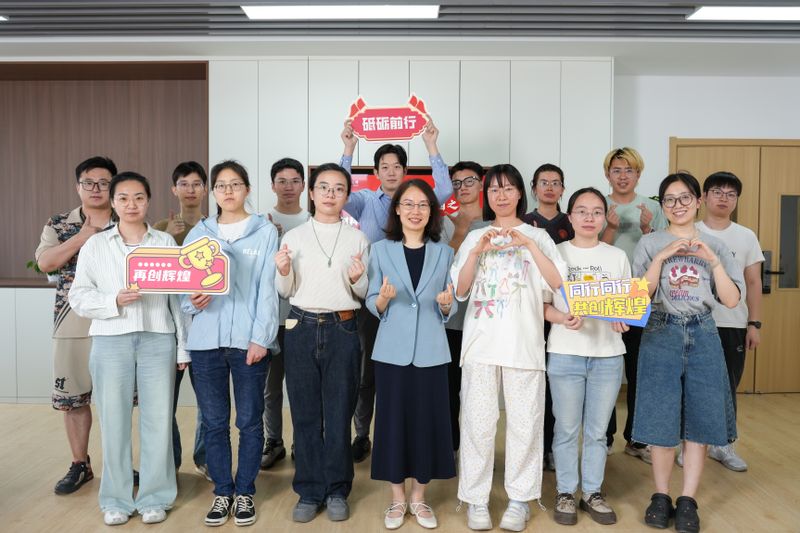
Over the past decade, Professor Qu has pursued foundational research and clinical translation of collagen-based medical materials. From uncovering molecular mechanisms regulating collagen structures to establishing engineered production lines, from cultivating interdisciplinary talents to building industry exchange platforms, she has demonstrated a strong commitment to advancing both research and its clinical application
Homogenization has long plagued biomaterials research. Many studies remain limited to incremental improvements and repeated approaches, resulting in publications but failing to address clinical needs. Professor Qu insists that valuable scientific breakthroughs must respond to real industrial and clinical problems.
Since joining the research team led by Academician Changsheng Liu in 2009, Qu has focused on translating laboratory achievements into clinical practice. Under Liu’s guidance, her team spent ten years analyzing fundamental differences between natural collagen and artificial materials. Through sustained accumulation and innovative thinking, they developed a “physical field precision regulation of collagen molecular assembly” system.
By inducing directional collagen arrangement via electric fields and integrating coupled technologies like light, ion, and electrostatic fields, they achieved multi-dimensional control over fiber diameter, orientation, porosity, and hierarchical structures, providing a pathway to fabricate collagen materials with microstructures nearly identical to natural tissues.
To transition from lab research to industrial application, the team upgraded technologies iteratively. Their self-developed cryogenic field control technology resolved uniformity challenges during process scaling. In June 2022, Professor Qu co-founded a technology base in Suzhou, establishing China’s first electric field-regulated collagen membrane production line, bridging the final gap to mass production. Leveraging “electro-assembly collagen functional membrane technology”, the team achieved end-to-end breakthroughs, earning national awards for disruptive innovation, gaining recognition as a National High-Tech Enterprise, and securing tens of millions of RMB in funding.
Currently, artificial corneas and oral membranes are in clinical trials, offering hope to hundreds of thousands of patients suffering from corneal blindness and oral bone defects.